/ THE SHORT ANSWER
- 01Maia 200 is in production for some Microsoft workloads.
- 02Maia 300 and larger deployment are planned for 2027.
- 03The vendor emphasizes tokens per megawatt and rack-scale throughput.
- 04Buyers should compare service outcomes, not chip claims alone.
/ dotSuper point of view
AI infrastructure competition is moving from peak chip specifications toward useful tokens delivered per unit of power, time and workload cost.
What changed?
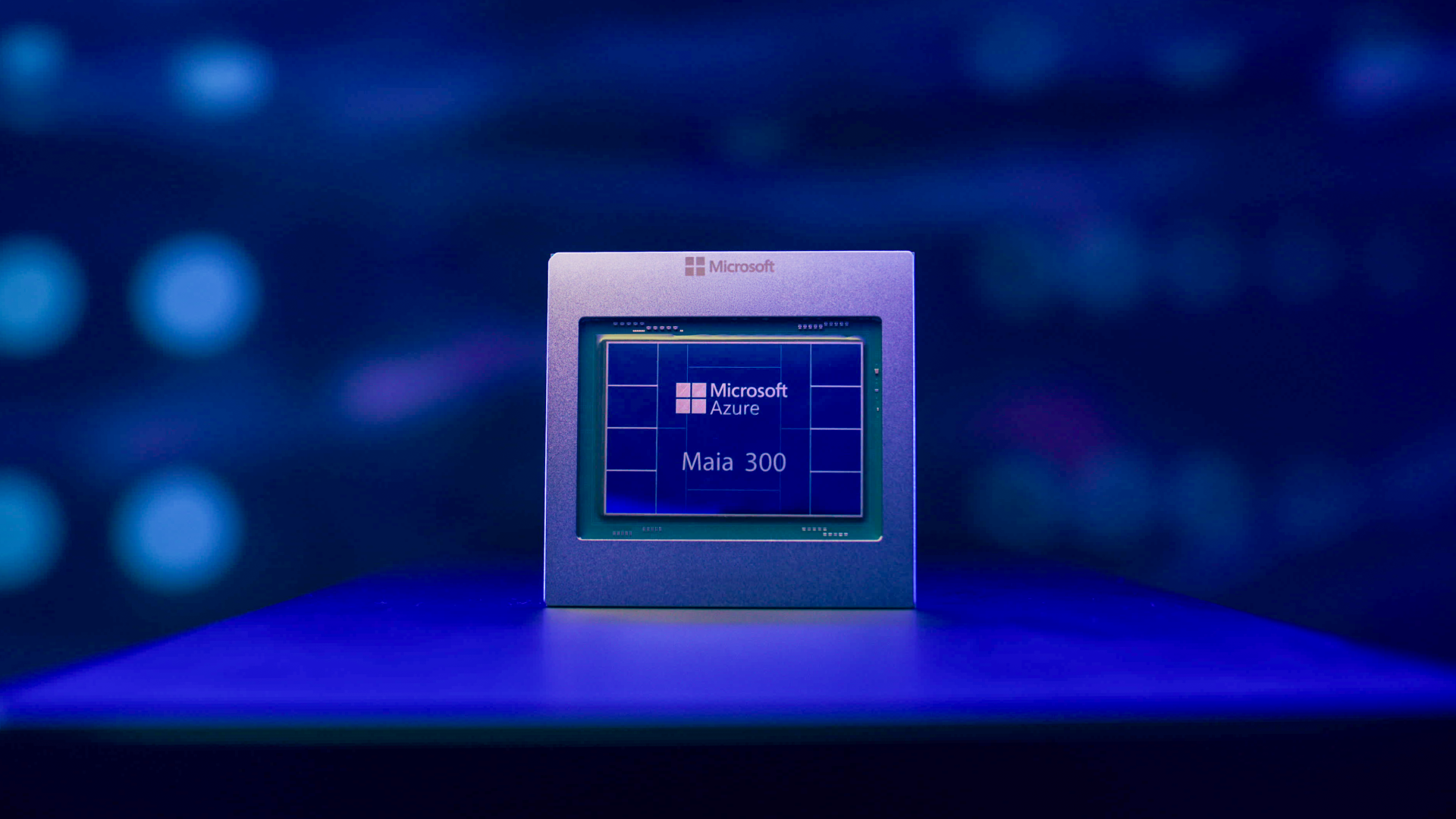
It announced plans for Maia 300 and multi-gigawatt Maia deployments beginning in 2027.
Maia 300 is being designed around sustained agent work, long contexts and responsive conversations.
Microsoft reports an expected 40 percent more tokens per megawatt than leading GPU-based systems and up to seven times Maia 200 rack-scale throughput in a stated configuration.
- Maia 200: serving selected current workloads.
- Maia 300: planned next generation.
- 2027: stated scale-up window.
Why does it matter?
A fast single response does not guarantee a fast completed workflow.
Chip and system design therefore need to consider latency, memory, bandwidth, power and scheduling together.
Buyers rarely select a chip directly, but these choices can affect cloud service price and responsiveness over time.
- Measure time to accepted task completion.
- Include power and service cost where relevant.
- Test long sessions and tool-heavy workloads.
What should we watch?
They are not a general comparison against every GPU service or a customer bill estimate.
Ask which workload, model, rack configuration and software stack produced any comparison.
Watch whether external users can reproduce meaningful end-to-end gains after deployment.
What should we do?
Record task completion, latency distribution, cost and failure recovery on real workloads.
Keep future chip plans on the roadmap, but do not defer an otherwise sound deployment based only on a 2027 hardware promise.
- Benchmark services available now.
- Include full workflow latency.
- Revisit hardware claims when deployed.
What this page cannot conclude
- 01Maia 300 is planned for 2027 and the cited performance figures are vendor claims.
- 02This article does not independently benchmark chips or cloud services.
Sources
- 01Microsoft to expand Azure Maia system to multi-gigawatt deploymentsMicrosoft · accessed Oct 24, 2026
Our editorial standard · Found an error? Send a correction with its source.
/ CITE OR SHARE THIS GUIDE
Make the evidence easy to verify.
When you reference this guide, link to its canonical URL. That gives readers one stable place for the evidence, limitations and future updates.
dotSuper Research Desk. (October 24, 2026). Maia 300: Why AI Chips Follow Agent Workloads. dotSuper. https://dotsuper.net/feeds/daily-briefing/2026-10-24-microsoft-maia-300-ai-agent-chip-design