/ THE SHORT ANSWER
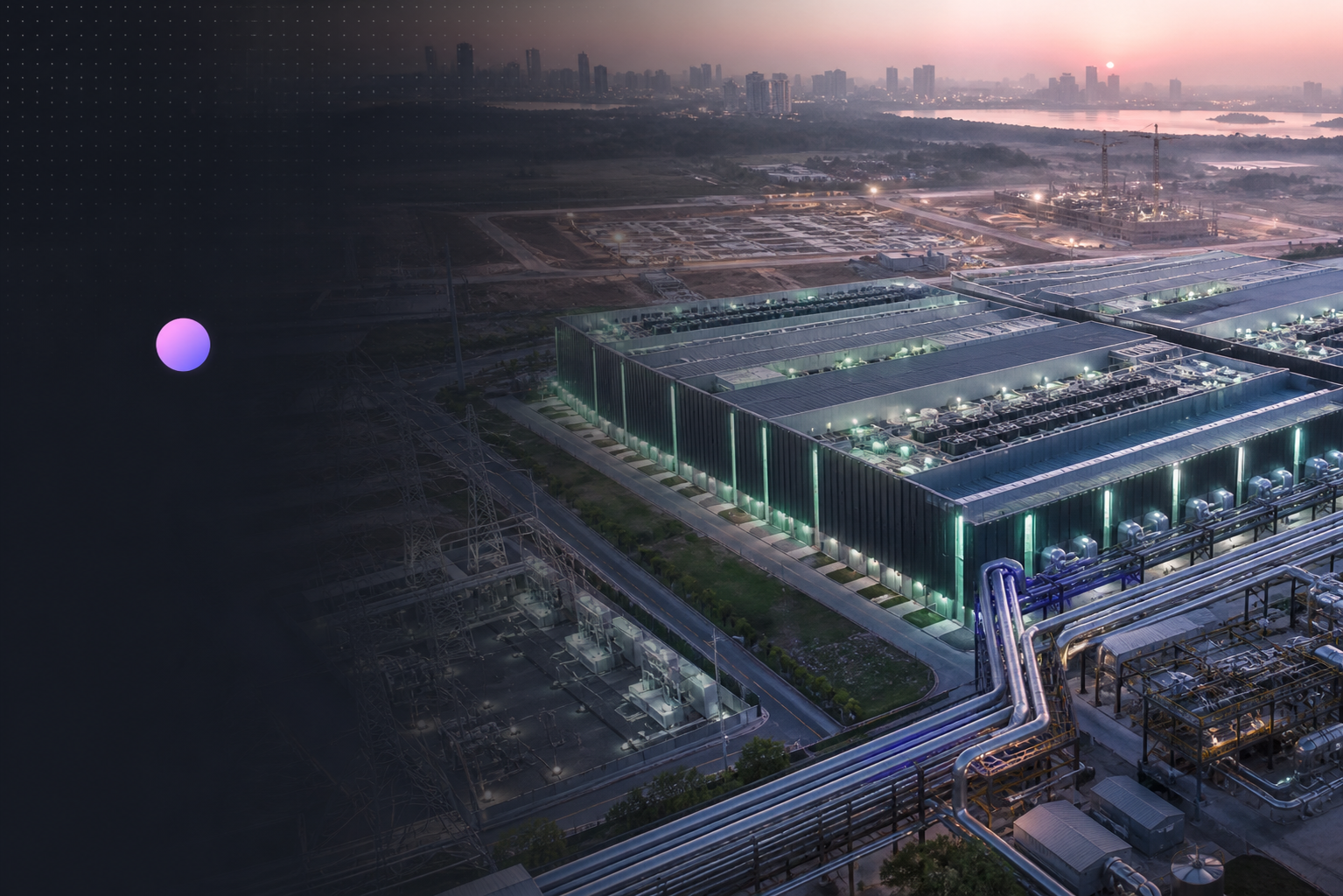
- 01TCS says its HyperVault subsidiary has secured 264 acres in Hyderabad for a campus with capacity of up to 1 GW.
- 02The company says development will proceed in phases according to customer demand and technology requirements.
- 03The planned campus targets high-density GPU workloads and includes liquid cooling, green-energy and water-neutral design intentions.
- 04A land parcel and maximum capacity do not establish the commissioning date, first-phase load, customer allocation or live service levels.
/ dotSuper point of view
Land turns a national AI infrastructure ambition into a more credible project, but procurement decisions should follow commissioned capacity and service evidence rather than the maximum build-out number.
What changed
TCS describes the site as purpose-built for frontier AI companies and hyperscalers using high-density GPU infrastructure for training, inference and advanced computing.
The company says the campus will be developed in phases, aligned with customer demand and technology requirements.
It lists direct-to-chip liquid cooling, high rack density, network connectivity, green energy and water-neutral design principles among the intended characteristics.
These are design commitments and plans, not evidence that the full campus is operating.
Reuters reported that HyperVault and its partners could invest up to ₹700 billion, about $7.4 billion at the exchange rate used in its report.
That figure is also a ceiling.
The immediate verified step is the land acquisition, while the first-phase capacity, delivery calendar, power arrangement and contracted customers were not disclosed in the announcement.
- Confirmed: 264 acres have been secured in Hyderabad.
- Planned: a phased campus with capacity of up to 1 GW.
- Not disclosed: first-phase megawatts, commissioning date, grid agreement and customer allocation.
The business test
Local capacity can improve data-residency options, network latency and procurement diversity.
Those benefits only become real when a specific phase is energised, certified and offered under measurable service terms.
Power is the decisive constraint.
A 1 GW campus would require a utility and transmission plan at industrial scale, plus backup, cooling and water arrangements that remain reliable under peak loads.
Buyers should ask how much capacity is firm, when it becomes available and which sustainability claims are design goals versus independently measured performance.
The phased model can reduce speculative build risk because capacity follows demand.
It can also make the headline difficult to compare with live facilities.
Procurement teams should separate land, planned shell capacity, energised IT load and customer-ready compute.
Each describes a different stage of delivery.
What businesses should do next
State the expected rack density, accelerator generation, network topology, data-residency needs, availability target, deployment window and ability to shift workloads across regions or providers.
Ask HyperVault or any competing provider for evidence tied to the phase being sold: utility commitments, cooling design, commissioning milestones, carrier diversity, operational certifications, incident processes and the boundary between facility services and managed compute.
Avoid using the eventual campus ceiling as a proxy for current availability.
Keep a second option for critical workloads.
The best negotiation position comes from portable data, model and orchestration layers, plus a tested recovery path.
Large infrastructure announcements are strategically useful, but resilience depends on what a buyer can verify and move.
- Compare customer-ready megawatts, not announced maximum capacity.
- Request phase-specific dates and acceptance criteria.
- Verify power, cooling, connectivity and operational controls.
- Preserve workload portability before signing a long-term commitment.
What this page cannot conclude
- 01The 1 GW figure is a maximum planned capacity, not current or committed operating capacity.
- 02The TCS release does not disclose a first-phase commissioning date, grid agreement, customer allocation or measured sustainability performance.
- 03The investment figure reported by Reuters is an upper bound for HyperVault and its partners.
- 04Commercial terms, regional availability and service levels will require direct supplier due diligence.
Sources
- 01TCS' HyperVault to establish large-scale AI data center campus in TelanganaTata Consultancy Services · accessed Sep 8, 2026
- 02India's TCS unit to invest up to $7.4 billion in AI data center campusReuters · accessed Sep 8, 2026
Our editorial standard · Found an error? Send a correction with its source.
/ CITE OR SHARE THIS GUIDE
Make the evidence easy to verify.
When you reference this guide, link to its canonical URL. That gives readers one stable place for the evidence, limitations and future updates.
dotSuper Research Desk. (September 8, 2026). TCS has secured land for a 1 GW AI campus. Buyers should test the delivery evidence.. dotSuper. https://dotsuper.net/feeds/daily-briefing/2026-09-08-tcs-hypervault-hyderabad-ai-campus